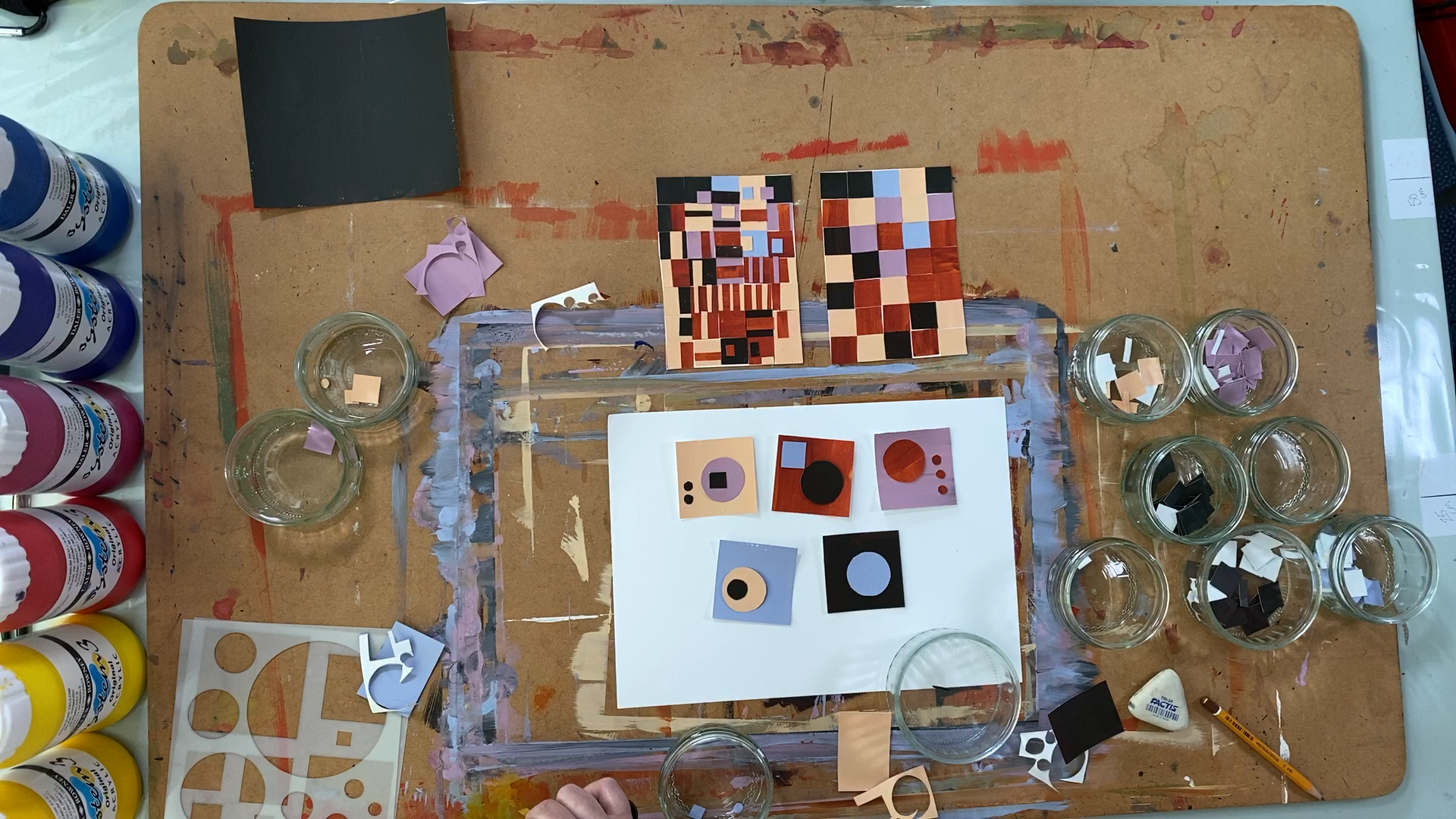
Design learning is rarely a straight line.
It doesn’t arrive in a single moment of clarity or a sudden breakthrough. Instead, it unfolds gradually ~ through noticing, experimenting, reflecting, and returning to ideas again and again.
Over the past months at Artybird Carnforth, we’ve explored design learning through a series of principles ~ colour, shape, line, texture and form. Not as rules to follow, but as lenses to look through. Ways of understanding what’s happening in the work, and why certain decisions feel easier or harder at different stages.
Taken together, these principles reveal something important:
design learning is cumulative. Each layer supports the next.
👉 Join the waiting list to get the link to our FINAL DesignPlus Discovery call
Design Learning Is About Structure, Not Speed
One of the most common misconceptions about design learning is that it’s about moving faster ~ producing more work, generating more ideas, making quicker decisions.
In reality, good design learning slows things down.
Structure provides permission to pause.
To look more carefully.
To understand why a piece is doing what it’s doing.
When artists work with design principles over time, confidence grows not because they know all the answers, but because they recognise patterns. They begin to trust the process, even when outcomes aren’t immediately clear.
How the Principles Work Together
Each design principle offers a different point of entry:
Colour invites emotional response and decision-making. It helps artists notice mood, balance, and restraint.
Shape draws attention to structure and proportion: how elements sit together on the page or within a piece.
Line introduces movement, direction, and rhythm.
Texture brings physicality and depth, engaging both eye and hand.
Form allows ideas to take up space, giving work presence and weight.
Individually, each principle is useful.
Together, they form a shared language ~ a way of talking about work that removes guesswork and reduces uncertainty.
This shared language is what makes learning together so powerful.
Learning as Practice, Not Performance
At Artybird Carnforth, design learning is approached as a practice rather than a performance.
There’s no expectation to arrive with polished outcomes. Instead, emphasis is placed on:
repetition
small experiments
reflection
conversation
When learning is framed this way, artists feel safer taking risks. Mistakes become information. Unfinished work becomes part of the process rather than evidence of failure.
Confidence grows quietly… through familiarity, not bravado.
The Role of Community in Design Learning
Design learning rarely happens in isolation.
Seeing how others approach the same principles ~ how they interpret, adapt, and sometimes struggle ~ helps normalise uncertainty. Conversations around work open up new ways of seeing and thinking.
Within group learning environments like DesignPlus and the Snowbirds, this shared exploration becomes a source of stability. People learn not just from instruction, but from witnessing each other’s process.
Community doesn’t accelerate learning. It steadies it.
What Design Learning Makes Possible
When artists understand the principles behind their decisions, something shifts.
They feel less stuck.
They make choices with more intention.
They develop work that feels grounded rather than rushed.
Design learning doesn’t eliminate uncertainty but it gives artists tools to work with it.
And perhaps most importantly, it creates space for work to evolve over time, without pressure to resolve everything at once.
Holding the Whole
As this chapter of design learning comes to a close, it’s worth pausing to notice the shape of the journey itself.
From colour to form, from uncertainty to structure, from isolated decisions to shared language.. the process reveals that design learning is less about mastering techniques and more about developing trust.
Trust in the process.
Trust in the materials.
Trust in one’s own way of working.
That trust is what carries learning forward… long after any particular course or campaign has finished.
👉 Join the waiting list for our FINAL DesignPlus Discovery Call to explore the design principles in a small, supportive creative community… and Find Your Birds!