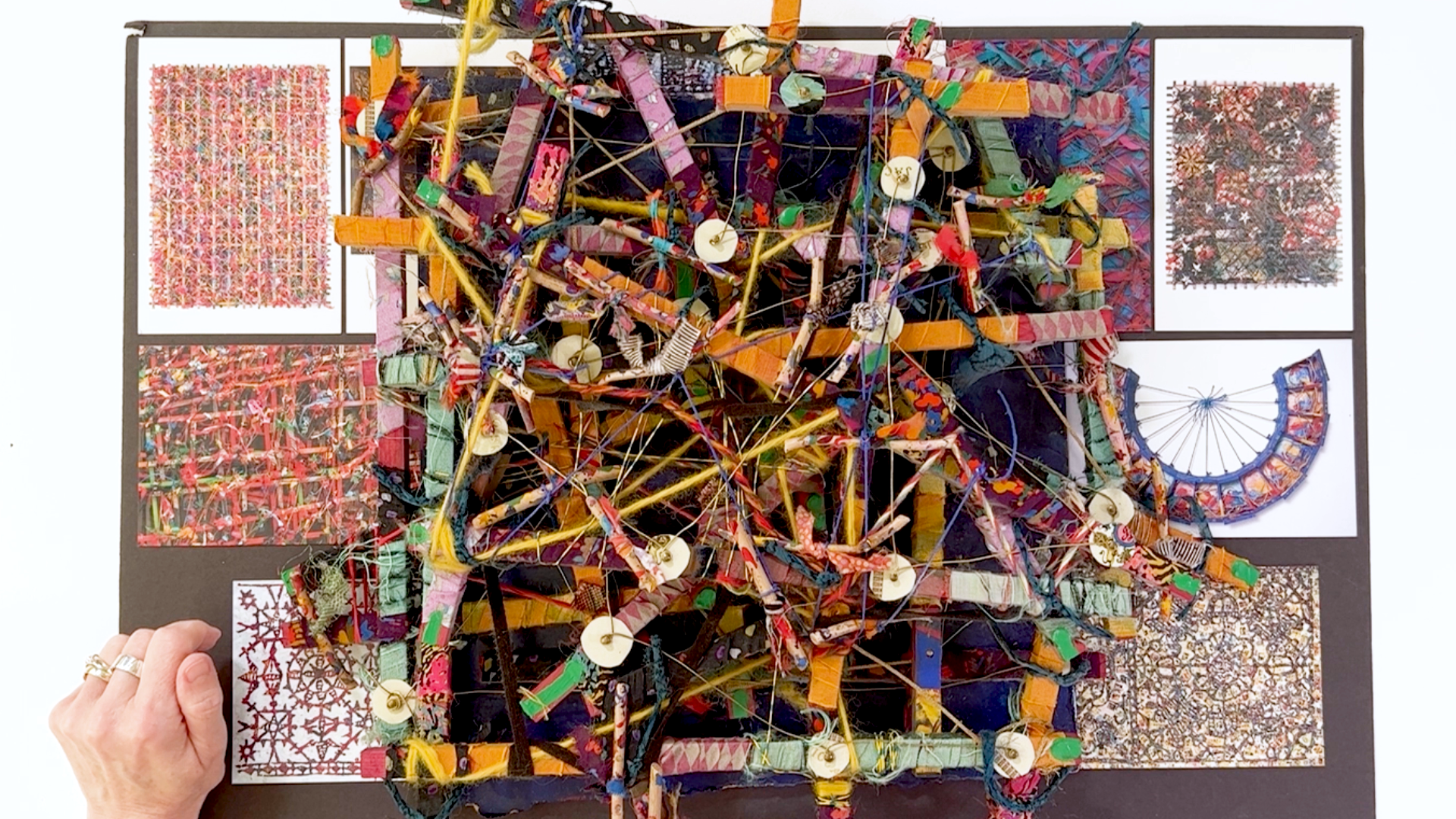
When Touch Becomes Language
Texture is often the first thing we respond to … even before we can name why.
A rough edge.
A soft surface.
A raised stitch catching the light.
In textile work especially, texture speaks directly to the body. It’s sensed as much as it’s seen. And yet, texture is often one of the least consciously designed elements of a piece. It’s something we “add” at the end, rather than something we shape with intention.
In our DesignPlus groups, Texture invites us to slow down and feel our way forward.
👉 Join the waiting list to get the link to our next DesignPlus Discovery call
Texture Is More Than Surface
It’s easy to think of texture as decoration ~ something tactile layered onto a finished composition. But when we pause and look closely, texture is actually structural. It affects:
how light moves across a piece
where the eye lingers
how weight and depth are perceived
the emotional tone of the work
A smooth surface can feel calm, restrained, distant.
A rough or layered surface can feel energetic, grounded, raw.
Texture doesn’t just describe a surface ~ it communicates.
Designing With Touch in Mind
One of the most useful shifts we see in the Texture sessions is when artists begin to design for touch, not just appearance.
What happens if the texture leads the decision-making?
What if the material itself suggests the direction?
In small exercises, artists explore texture through simple actions:
layering fibres
stitching into resistance
compressing, stretching, abrading
combining materials that behave very differently
The aim isn’t complexity. It’s awareness.
When artists pay attention to how materials respond, the work becomes more intentional, less forced.
Texture becomes a conversation rather than an effect.
Texture and Memory
Texture often carries memory.
Wool that reminds us of warmth.
Paper that feels fragile or worn.
Surfaces that echo landscape, weather, or time.
In group discussions, artists frequently discover that the textures they’re drawn to connect back to personal experience… places lived, work done, hands used. Naming this connection can be powerful. It allows texture to become meaningful rather than habitual.
Within the Snowbirds and DesignPlus communities, these insights are often shared gently:
“I didn’t realise why I kept returning to this surface until now.”
That moment of recognition is part of the learning.
Shared Sensitivity
Texture is also where learning together becomes especially valuable.
Because texture is felt subjectively, seeing how others respond opens new possibilities.
One artist notices softness where another sees fragility.
One experiences resistance as frustration; another as reassurance.
In DesignPlus sessions, artists hold materials up to the camera, describe how something feels, listen to others’ interpretations, and return to their work with fresh curiosity.
This shared sensitivity deepens trust ~ not just in the group, but in one’s own instincts.
Texture as Permission
For many, working intentionally with texture offers permission:
permission to let go of polish
permission to work messily
permission to experiment without knowing the outcome
Texture reminds us that not everything has to be smooth or resolved. Some surfaces are allowed to stay open, rough, layered, incomplete.
That permission often unlocks movement elsewhere in the work.
Finding Your Way Through Feel
As the fourth design principle in our series, Texture builds naturally on Colour, Shape, and Line. Once structure is in place, texture gives the work its physical presence. Its voice.
If you’ve been feeling unsure about where a piece is heading, try asking:
What does this want to feel like?
Often… the answer is already in your hands!
👉 Join the waiting list for our next DesignPlus Discovery Call to explore the design principles in a small, supportive creative community… and Find Your Birds!